
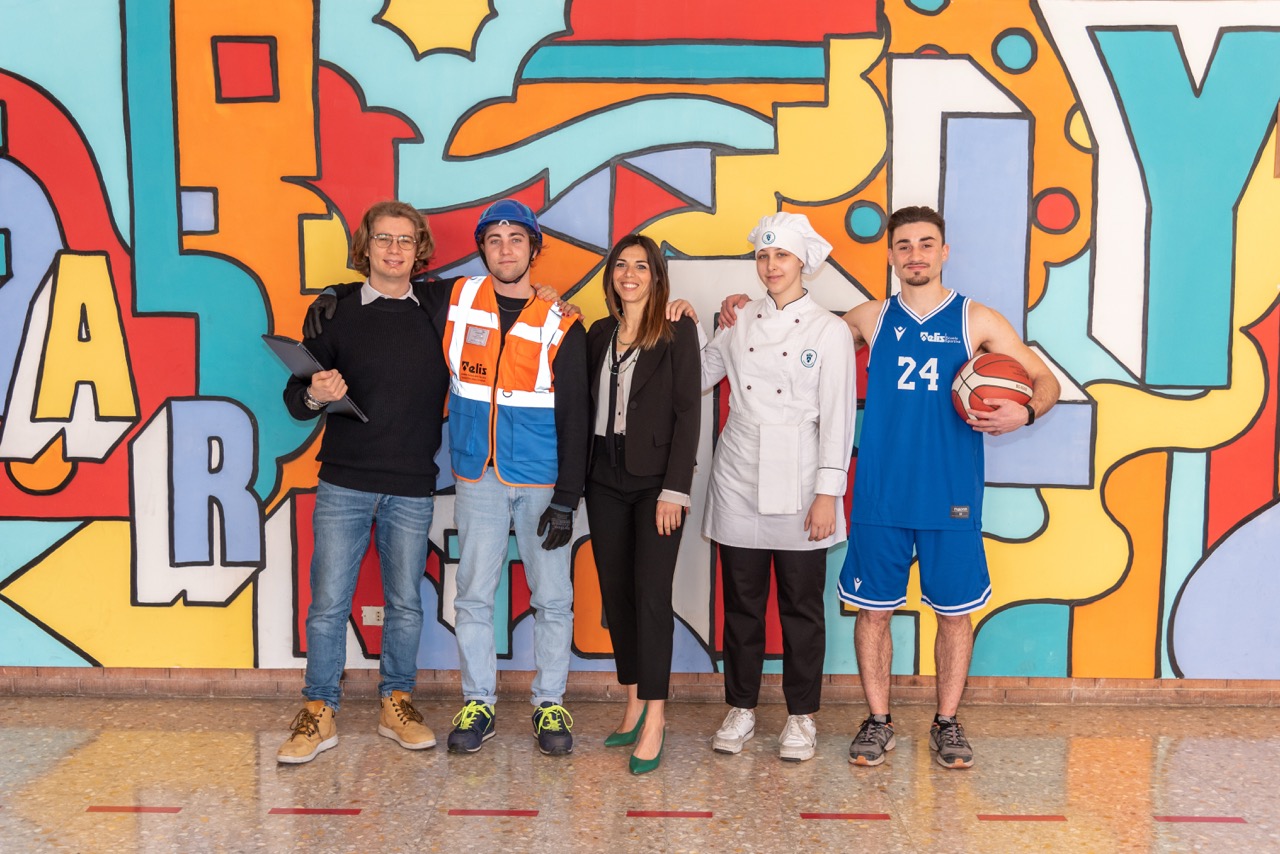
What are the mission and purpose of your organisation? What values guide your work?
ELIS is a non-profit organization committed to bridging education and the world of work by fostering the development of people, organizations, and territories. Its mission is to support young people in discovering their talents and professional vocations, while promoting innovation and sustainable growth through strong partnerships with companies, schools, and institutions. ELIS operates according to values such as inclusion, responsibility, collaboration, and personal development. It believes in the dignity of work as a tool for social advancement and in education as a driver of equal opportunities. Through continuous dialogue with the economic and social ecosystem, ELIS promotes a human-centered approach to learning, where technical excellence is combined with personal and relational growth.
Which previous experiences, projects, or achievements are most relevant to understanding your contribution?
I lead activities within the ELIS "Sistema Scuola - Impresa & Orientamento" area, where we work to connect education with the world of work and support young people in discovering their talents and future pathways. Over the years, this work has involved a wide network of schools, students, and companies through orientation programs and innovative learning experiences. This ongoing dialogue with schools and territories is central to my contribution, as it allows me to bring into the project a deep understanding of students’ needs and of the challenges schools face in supporting their development.
Why do you believe in the project? What results do you expect to achieve?
I believe in this project because it addresses a challenge that clearly emerges from our daily work with schools: the need to move beyond a standardized approach to assessment that often does not fully recognize students’ potential. In our guidance activities, we see how important it is for young people to feel seen in their uniqueness, and how much this impacts their motivation and future choices. ASSESSION4ALL represents a natural evolution of this work. I expect it to provide concrete tools to schools to better understand and support students’ learning journeys. For ELIS, it is an opportunity to strengthen our approach with innovative, talent-oriented models; for students, greater awareness and motivation; for teachers, more effective ways to personalize learning pathways.
What change could the project bring to assessment and to teachers’ work?
I believe the most significant change is cultural: shifting from an assessment system focused on measuring performance to one that supports growth and recognizes individual potential. This means offering students a more complete and meaningful representation of themselves, not limited to grades. For teachers, the integration of new tools and approaches can provide valuable support in understanding students’ progress and in personalizing teaching. In our daily work, we see how powerful it is when a student feel recognized in their potential: it changes their engagement, their confidence, and the way they approach their future. This project can help make that shift more systematic and accessible.
What legacy would you like the project to leave?
I would like the project to leave a tangible and lasting impact, starting from tools and assessment models that schools can continue to use beyond the project’s duration. It is important that what we develop is not only innovative, but also practical and accessible. At the same time, I hope the project will strengthen relationships between schools, territories, and international partners, creating a network that continues to exchange practices and grow over time. More broadly, I would like it to contribute to spreading a more human-centered and talent-oriented culture of education, where assessment becomes a tool to support development rather than simply measure it.
What message would you like to share with the public?
In our work, we meet many students whose potential is not always visible through traditional assessment systems. This project starts from a simple but powerful idea: every student deserves to be seen beyond their grades. Rethinking assessment means giving value to different talents, supporting motivation, and building more inclusive learning pathways. It is not just about changing tools, but about changing the way we look at education and at young people’s future.
-
Getting to know ASSESSION4ALL’s partners means understanding how different experiences can contribute to a common goal. In the case of ELIS, the added value lies in its first-hand knowledge of the world of education and career guidance, combined with its ability to forge links between education, businesses and local communities.
This perspective echoes one of the project’s fundamental objectives: to ensure that assessment is not merely the outcome of a learning journey, but also becomes a tool for recognising students’ potential and supporting their development.